A dead car battery can interrupt a workday, a school pickup, or a weekend trip in Asheville. Cold mornings in Black Mountain, short errands around Weaverville, and vehicles parked for several days can all reveal a battery that is already weak. Knowing the difference between a discharged battery and a charging-system problem can save time and help you avoid an unsafe roadside situation.
This guide explains common warning signs, what to check before requesting a jump-start, and when drivers in Fletcher, Canton, and Western North Carolina should seek professional help.
Why Car Batteries Fail More Often When Temperatures Change
A conventional 12-volt starting battery supplies a large burst of electricity to crank the engine. As temperatures fall, a battery delivers less available starting power while a cold engine may require more effort to start. Heat can also accelerate battery aging, so damage accumulated during warm months sometimes becomes obvious during the first cold spell.
Battery life depends on age, driving habits, charging performance, climate, and the vehicle’s electrical demands. There is no single replacement age that applies to every vehicle. A professional battery and charging-system test is more useful than guessing from the calendar alone.
Seven Signs Your Battery May Be Weak
- Slow cranking: The starter turns the engine more slowly than usual, particularly after the vehicle has sat overnight.
- Rapid clicking: A series of clicks when you try to start can indicate insufficient power, although starter or connection problems are also possible.
- Dim lights before starting: Headlights or interior lights may appear weak when the engine is off.
- Repeated jump-starts: If the vehicle starts with a boost but will not restart later, testing is needed.
- Corrosion at terminals: Deposits around battery connections may contribute to poor electrical contact.
- Electrical accessories behaving strangely: Low voltage can affect some vehicle electronics, but the cause needs diagnosis.
- A battery warning light: This can indicate a charging-system problem, not necessarily a bad battery.
None of these symptoms alone proves that the battery needs replacing. A faulty alternator, loose connection, starter issue, parasitic electrical drain, or other fault can produce similar results.
What to Check Before Calling for a Jump-Start
First, make sure the vehicle is parked safely, the transmission is in Park or Neutral as appropriate, and the parking brake is applied. Switch off unnecessary accessories. Check whether the headlights were left on or a door was not fully closed.
If it is safe to inspect the battery, look for obvious physical damage, swelling, cracks, leaking fluid, or a strong unusual odor. Do not attempt a jump-start if the battery appears damaged, frozen, or leaking. Keep flames and sparks away from batteries because charging can release flammable gas.
Some newer vehicles, hybrids, and electric vehicles have specific jump-start points and procedures. Consult the owner’s manual before attempting anything. Never assume the same cable connection procedure works for every vehicle.
How to Jump-Start a Vehicle Safely
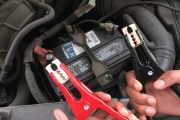
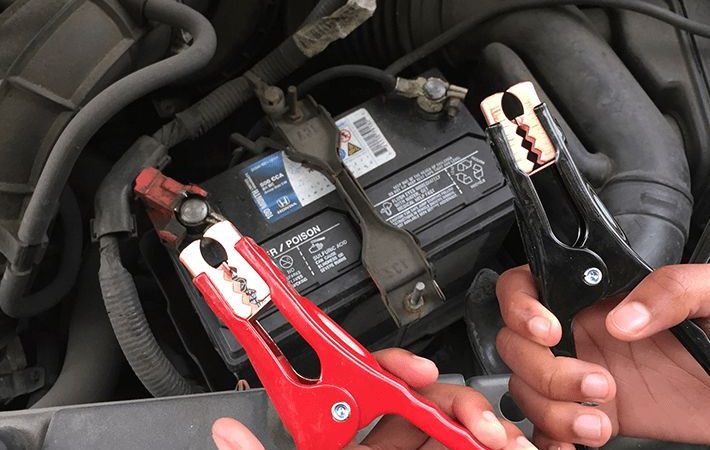
Use the vehicle manufacturer’s instructions and a jump pack rated for your vehicle, or have a qualified roadside professional handle the service. Incorrect connections can damage electrical components and cause injury. Before connecting cables, confirm the system voltage and the designated positive and negative connection points. Many vehicles require the negative connection at a specified chassis or engine ground rather than directly at the discharged battery.
Keep cables away from belts, fans, and other moving parts. Never allow clamps to touch one another or connect them to the wrong polarity. If you are unsure about any step, stop and request assistance. Once the engine starts, follow the owner’s manual and the jump pack’s instructions for safe disconnection.
A successful jump-start does not prove the battery is healthy. It only shows that additional electrical power helped the vehicle start.
When a Jump-Start Is Not Enough
If the engine stalls soon after starting, the charging-system warning light stays illuminated, or the vehicle repeatedly needs a boost, do not rely on a long drive to fix the problem. The alternator, battery, wiring, or another component may require testing. A severely discharged or damaged battery may not recover adequately through normal driving.
If the engine cranks normally but does not fire, the problem may not involve the battery at all. Fuel delivery, ignition, sensors, and other systems can prevent starting. Describe exactly what happens when you turn the key or press the start button so the technician can narrow down the possibilities.
Can Short Trips Drain a Car Battery?
Repeated short trips may not give the charging system enough time to replace the energy used for starting, especially when lights, defrosters, and other accessories are running. Vehicles left unused for extended periods may also lose charge because electronic modules and security systems consume small amounts of electricity while parked.
If you drive infrequently, ask a professional whether a compatible battery maintainer makes sense. Use only equipment approved for the battery chemistry and vehicle, and follow the manufacturer’s safety instructions. Avoid disconnecting modern vehicle batteries casually, since some systems may require special procedures or reinitialization.
Battery Maintenance Tips for Asheville-Area Drivers
- Have the battery tested: Especially before winter or when starting becomes noticeably slower.
- Keep connections secure: Loose or heavily corroded terminals should be inspected and serviced correctly.
- Watch for charging warnings: A battery-shaped dashboard light while driving may signal a charging failure; arrange safe assistance promptly.
- Check the correct battery type: Some start-stop vehicles require AGM or EFB batteries and may need battery registration after replacement.
- Plan for mountain travel: A reliable starting system is important before heading into areas with limited cell coverage or roadside services.
For a broader pre-trip check, read our Western North Carolina mountain-drive tire checklist. Tires and batteries are different systems, but both deserve attention before a long trip.
What to Do If Your Car Will Not Start in a Parking Lot
Move yourself and passengers away from traffic if possible. If the vehicle is stopped in an unsafe location, prioritize personal safety and contact appropriate roadside or emergency assistance. Do not work beside fast-moving traffic or in a confined space where engine exhaust can accumulate.
When requesting help, provide your exact location, vehicle year, make, model, and what happens when you attempt to start. Mention whether the dashboard lights turn on, whether you hear clicking, and whether the vehicle recently needed another jump. This information helps determine the right equipment and next steps.
Contact ACO Tires & Detailing for Roadside Help
ACO Tires & Detailing serves drivers around Asheville, Black Mountain, Weaverville, Fletcher, Canton, and surrounding Western North Carolina communities. Contact us to ask about jump-start assistance, mobile service availability, or other vehicle maintenance needs. Service availability and pricing should be confirmed when you call.
Visit acotires.com, call 828-338-2206 for mobile service, or reach the shop at 828-279-2089. Our shop address is 2 Shagbark Dr, Asheville, NC.
If you are also dealing with a damaged tire, our flat tire repair or replacement guide explains when a tire may need professional replacement instead of a simple repair. Whether the problem is a dead battery or a flat tire, getting a proper diagnosis is safer than repeatedly trying a temporary fix.