Short answer: Many vehicles benefit from tire rotation about every 5,000 to 8,000 miles, but the correct interval depends on your vehicle manufacturer’s recommendations, the tire type, and how the vehicle is driven. The owner’s manual should be your first reference.
Regular tire rotation helps distribute normal wear more evenly between the front and rear tires. That matters for Asheville drivers who deal with mountain roads, changing weather, winding routes, potholes, and a mix of city and highway driving.
Why Tire Rotation Matters
Your tires do not all perform the same job. On many front-wheel-drive vehicles, the front tires handle steering, braking, and much of the engine’s power. That extra work can cause them to wear faster than the rear tires. Rear-wheel-drive and all-wheel-drive vehicles can develop different wear patterns, while performance and directional tires may have special rotation limits.
Rotating the tires according to the correct pattern can help reduce irregular wear and support more consistent traction and handling. It can also make it easier to identify a problem before it becomes expensive, such as an alignment issue, worn suspension component, or underinflation.
How Often Should You Rotate Your Tires?
Start with the maintenance schedule in your owner’s manual. If the manufacturer does not provide a clear interval, a common starting point is every 5,000 to 8,000 miles or during every other oil change. Rotate sooner if you notice uneven wear, a change in handling, or the vehicle pulling to one side.
The right schedule can change based on:
- Front-wheel drive, rear-wheel drive, all-wheel drive, or four-wheel drive
- Highway driving versus frequent stop-and-go traffic
- Heavy loads, towing, or long mountain trips
- Different tire sizes on the front and rear axles
- Directional, staggered, or specialty tire designs
- Alignment or suspension problems
Signs Your Tires May Need Rotation
You do not have to wait for the exact mileage if your tires are showing warning signs. Look for:
- More wear on the front tires than the rear tires
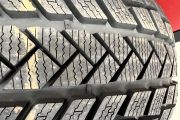
- Feathered or cupped tread blocks
- Uneven wear across the inside or outside edge
- Vibration or noise that changes with speed
- The vehicle feeling less stable during turns or braking
Uneven wear is not always fixed by rotation alone. It can point to incorrect inflation, poor alignment, worn shocks or struts, or another mechanical issue. A technician should inspect the cause before simply moving the tires around.
Can Every Tire Be Rotated?
No. Some vehicles use different-size tires front to rear, which may prevent a normal rotation. Directional tires must stay on the same side unless they are dismounted and remounted. Run-flat and performance tires may also have specific requirements.
Never assume a rotation pattern based only on how the tires look. The tire sidewall markings and the vehicle manufacturer’s instructions should be checked first.
What Else Should Be Checked During a Tire Rotation?
A rotation is a good time to inspect the entire tire and wheel assembly. Ask the technician to check:
- Tire pressure against the vehicle’s recommended cold PSI
- Tread depth and the built-in treadwear indicators
- Cracks, cuts, punctures, bulges, or sidewall damage
- Wheel balance if there is vibration
- Alignment if the vehicle pulls or the tread is wearing unevenly
- Valve stems and TPMS sensors when appropriate
NHTSA advises drivers to monitor tread wear, tire damage, inflation pressure, and changes in tire performance. Tires should be replaced when the tread reaches the legal minimum or when the tire has damage that makes it unsafe to use. Review NHTSA tire-safety guidance for additional information.
Why Tire Rotation Is Especially Useful for Asheville Drivers
Driving around Asheville and Western North Carolina can put different demands on each tire. Curving roads, steep grades, frequent braking, temperature swings, and rough pavement can reveal wear patterns faster than steady flat-road driving. If you regularly travel mountain routes, the Blue Ridge Parkway, or long regional commutes, checking the tires between service visits is a smart habit.

Need Tire Rotation or Mobile Tire Service in Asheville?
If your tires are wearing unevenly, your vehicle is vibrating, or you are not sure which rotation pattern applies, ACO Tires can inspect the tires and explain the next step. ACO Tires offers mobile tire service at your home or office and also serves customers at the shop at 2 Shagbark Dr, Asheville, NC.
Schedule through acotires.com or call the mobile service team at 828-338-2206. For shop assistance, call 828-279-2089.
Final Takeaway
For many vehicles, rotating tires every 5,000 to 8,000 miles is a useful starting point, but your owner’s manual takes priority. Watch for uneven wear, vibration, pulling, or visible damage, and have the tires inspected when something changes. Consistent rotation and timely inspections can help Asheville drivers maintain more even wear and safer, more predictable handling.