Correct tire pressure supports safer handling, more even tread wear, and better tire performance. It is especially important for drivers in Asheville and Western North Carolina, where mountain roads, changing temperatures, potholes, and long highway drives can expose tire problems quickly.
Where to Find the Correct Tire Pressure
Look for the Tire and Loading Information label on the driver-side doorjamb or door frame. The recommended PSI may also be listed in your owner’s manual. Many vehicles use different pressure specifications for the front and rear tires, so check each position carefully.
Do not use the number molded into the tire sidewall as your everyday target. That number is the tire’s maximum allowable pressure, not necessarily the pressure recommended for your vehicle.
Why You Should Check Tires When They Are Cold
For the most accurate reading, check the tires before driving or at least three hours after the vehicle has been parked. Driving heats the air inside the tire and can temporarily increase the reading.
If you discover a tire is low while you are already on the road, add air carefully until it reaches the vehicle manufacturer’s recommended cold pressure. Then recheck it later when the tire is cold.
Step-by-Step: How to Check Tire Pressure
- Park safely. Choose a level area away from traffic when possible.
- Find the recommended PSI. Check the driver-door label or owner’s manual.
- Remove the valve-stem cap.
- Press the gauge firmly onto the valve stem.
- Compare the reading with the recommended pressure. Front and rear numbers may differ.
- Add or release air as needed. Make small adjustments and recheck.
- Replace the valve-stem cap. Repeat for all four tires and the spare if equipped.
What the TPMS Warning Light Really Means
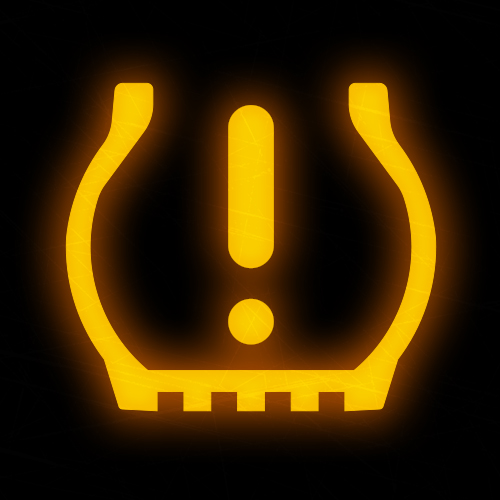
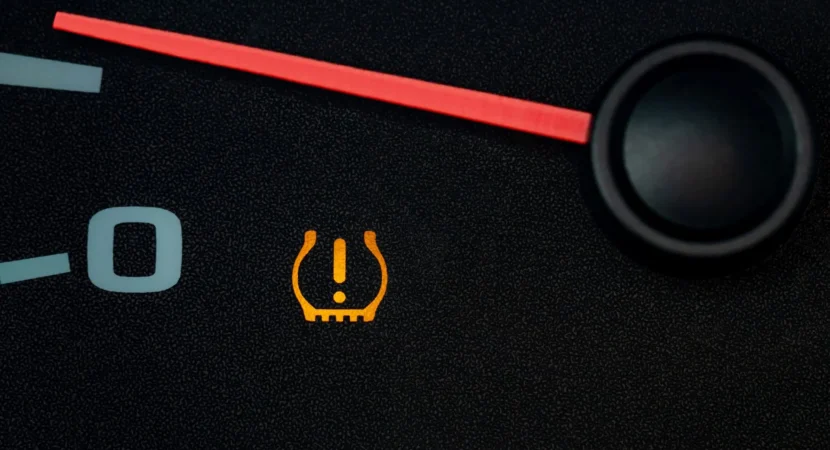
Your Tire Pressure Monitoring System can alert you when a tire is significantly underinflated, but it is not a replacement for regular inspections. A TPMS light may appear after a temperature change, following a puncture, or when a tire slowly loses air.
If the light comes on, check all four tires as soon as it is safe. Look for a nail, screw, cut, bulge, or other damage. If the warning light flashes and then stays on, the system may have a fault that needs professional diagnosis.
Signs You Should Not Keep Driving
Stop and seek professional help if you notice:
- A visible bulge, crack, cut, or puncture
- A tire that loses pressure repeatedly
- Strong vibration, pulling, or unusual noise
- Severe or uneven tread wear
- A tire that is visibly flat or damaged after hitting a pothole or curb
Do not attempt to repair a tire yourself if you are unsure whether the damage is repairable. Driving on a severely underinflated or damaged tire can create additional damage and increase the risk of a failure.
How Asheville Drivers Can Make Tire Checks Easier
Keep a reliable tire-pressure gauge in your vehicle and add a quick inspection to your regular routine. Check before trips through the Blue Ridge Parkway, mountain routes, or long drives out of town. Temperature swings can also change pressure readings, so a tire that looked fine last month still deserves a new check.
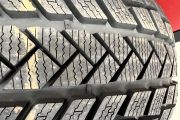
It also helps to inspect the tread and sidewalls at the same time. Look for cuts, cracks, bulges, or uneven wear. If the tread is worn down to the built-in wear indicators or the legal minimum, have the tire professionally evaluated.
Need Help With Tire Pressure or Mobile Tire Service?
If you are in Asheville or the surrounding area and do not have the equipment, time, or confidence to inspect a tire problem, ACO Tires can help. Our mobile tire service can come to your home or office for tire-related service, and our shop is located at 2 Shagbark Dr, Asheville, NC.
Schedule through acotires.com or call the mobile service team at 828-338-2206. For shop assistance, call 828-279-2089.
For additional tire-safety guidance, review the National Highway Traffic Safety Administration’s recommendations on tire pressure, tread, TPMS, and tire maintenance.
Final Takeaway
Checking tire pressure correctly takes only a few minutes, but the details matter: use the vehicle’s recommended PSI, check when the tires are cold, inspect every tire, and do not ignore a TPMS warning or visible damage. A simple monthly habit can help you catch problems before they become a roadside emergency.