A small bubble or bulge on the side of a tire can look harmless, but it may signal serious internal damage. If you notice a tire sidewall bulge while driving around Asheville or Western North Carolina, do not ignore it. The safest choice is to stop driving on that tire and arrange professional assistance.
What Does a Bulge on Your Tire Mean?
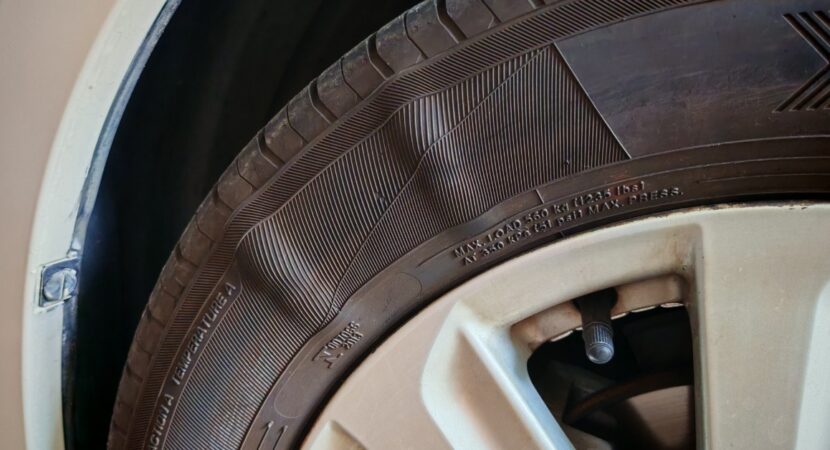
A tire sidewall bulge is a raised, bubble-like area on the tire’s side—the smooth surface between the tread and the wheel. It usually means the tire’s internal cords or structure have been damaged, allowing air pressure to push the rubber outward in that spot.
The outer rubber may still look intact, but the structure underneath may no longer be able to safely contain the air pressure. A bulge is different from normal lettering, molding marks, or small surface scuffs. If you are unsure whether a raised area is abnormal, have the tire inspected by a tire professional.
What Causes a Tire Sidewall Bulge?
- Potholes and road impacts: Hitting a deep pothole, broken pavement, or a sharp road edge can pinch the tire against the wheel and damage its internal cords. Asheville-area roads and mountain routes can have uneven pavement, especially after changing weather.
- Hitting a curb: Striking a curb while parking or turning can damage the sidewall even when there is no obvious cut.
- Driving with low tire pressure: An underinflated tire flexes more than intended. That extra flex can build heat and make impact damage more likely.
- Overloading the vehicle: Carrying more weight than the tire and vehicle are rated for can increase stress and heat.
- Previous damage: A tire may develop a visible bulge after an impact that seemed minor at the time. Damage can become noticeable later.
How to Recognize a Dangerous Tire Bulge
Look for a localized bubble or swelling on the sidewall that stands out from the tire’s normal shape. Check the outside sidewall when parked safely; if accessible, also have the inner sidewall checked, because damage is not always visible from the outside. Other warning signs may include a sudden loss of pressure, vibration, a thumping sound, or a pull in the steering.
Do not crawl under a vehicle or put yourself near moving traffic to inspect a tire. If you have just hit a pothole, pull over somewhere safe, turn on your hazard lights if needed, and look from a safe position. A bulge is enough reason to stop using that tire even if the tire is not currently losing air.
Can You Drive With a Tire Bubble?
No. A tire with a suspected sidewall bulge should not be driven on. The damaged area can fail suddenly, potentially causing a rapid loss of air and loss of vehicle control. There is no reliable way to predict how long a damaged tire will last, so driving slowly or taking only a short trip does not make it safe.
Avoid highway speeds and do not drive to a tire shop on the damaged tire. If you can safely install a properly inflated spare and your vehicle’s manual permits it, follow the manual’s instructions and any speed or distance limits for the spare. Otherwise, arrange roadside assistance or professional mobile tire service. If the vehicle is in a dangerous location, prioritize getting yourself to a safe place away from traffic.
What Should You Do After Hitting a Pothole in Asheville?
- Find a safe place to stop. Avoid stopping in a travel lane or on a narrow shoulder if you can safely reach a safer location.
- Check for visible damage. Look for a sidewall bubble, cut, bent wheel, or tire that appears low. Do not touch or press on a bulge.
- Check tire pressure only when it is safe. Use the pressure listed on the driver-side door-jamb label, not the maximum pressure printed on the tire. Correct pressure does not make a bulged tire safe to drive on.
- Arrange an inspection. A professional can assess the tire and wheel and check for other damage from the impact.
- Pay attention to changes in handling. Vibration, pulling, or unusual noise after an impact may indicate tire, wheel, or suspension damage.
For routine maintenance, see our guide on how to check tire pressure correctly in Asheville. Keeping tires properly inflated helps reduce avoidable stress, though it cannot prevent every impact-related failure.
Can a Tire With a Sidewall Bulge Be Repaired?
In general, a structural sidewall bulge is not safely repairable. A patch or plug cannot restore damaged internal cords, and a bulge should not be treated as a cosmetic issue. The tire typically needs to be replaced. A technician should also inspect the wheel and surrounding components for impact damage and confirm that the replacement tire matches the vehicle’s requirements.
If only one tire is being replaced, ask whether the tread depth and tire type are compatible with the other tires. Some vehicles—particularly certain all-wheel-drive models—have specific limits for differences in tire circumference, so check the owner’s manual or ask a qualified tire professional.
How to Reduce Your Risk of Tire Damage
- Check tire pressure at least monthly and before longer trips, using a reliable gauge when the tires are cold.
- Slow down for potholes and rough pavement when it is safe to do so, and avoid swerving suddenly into traffic.
- Keep an appropriate following distance so you have more time to spot road hazards.
- Inspect tires for cuts, cracking, unusual wear, and bulges; have damage checked promptly.
- Rotate tires according to your vehicle and tire manufacturer’s recommendations. Our guide explains how often to rotate your tires in Asheville.
- Do not exceed your vehicle’s load rating, and replace tires that are worn beyond safe limits.
Need Tire Service in Asheville, NC?
If you find a tire sidewall bulge, ACO Tires can help you determine the next safe step. Our mobile tire service serves Asheville and surrounding Western North Carolina communities, with service available at your home or workplace when the situation and service needs allow.
ACO Tires & Detailing
Shop: 2 Shagbark Dr, Asheville, NC
Mobile tire service: 828-338-2206
Shop phone: 828-279-2089
Visit acotires.com
Final Thoughts
A sidewall bulge is a warning sign of possible internal tire damage, not something to monitor for a few more weeks. Stop driving on the affected tire, avoid attempting a repair, and arrange professional assistance. A prompt inspection can help you get back on the road more safely and identify any additional damage caused by the impact.